Get In touch with us
Let us know if you have any questions by using the contact form below. We will get back to you as soon as possible. Please note our data privacy policy.
Before you load up the truck and head to a powder coating shop in New Jersey, a little prep work on your end can save you time, money, and a ton of frustration. Whether you’re bringing in a set of wheels, motorcycle parts, railings, or random brackets from a restoration project, knowing how to prepare parts for powder coating in NJ makes a big difference in the final finish.
Powder coating is what we do all day at Rusty Lions. We do it for cars, motorcycles, buildings, outdoor furniture, restorations, and more. When consumers do a bit of “homework” before dropping off parts, the whole process runs smoother and the outcomes look even better. Here’s a guide on what to do before you drop parts at a powder coating shop in New Jersey - plus a handy powder coating checklist at the end.
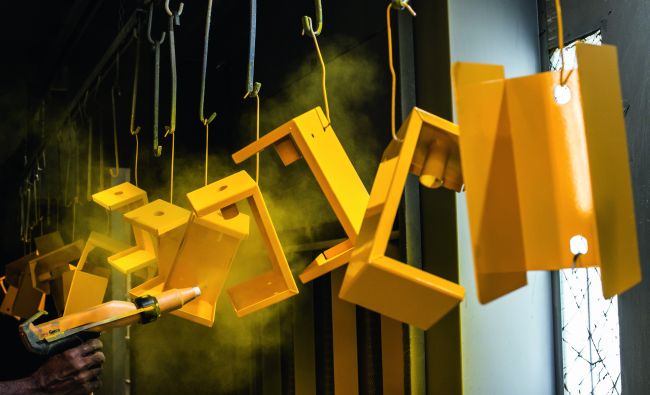
Before you break out the wrenches, it’s smart to touch base with the shop you’re using.
At Rusty Lions, we offer full-service metal finishing—powder coating, Cerakote, paint, welding, sandblasting, stripping, and restorations. But every job is a little different, so a short conversation helps set expectations on customer prep powder coating tasks, like:
IA five-minute call or email can literally save hours of rework or delays later on.
NHere’s where a lot of people either don’t do enough or go way too far.
For most powder coating jobs, you’ll want to:
This is one of the most important masking and disassembly tips: If it can melt, burn, or outgas at 375–400°F (typical curing temperature), it shouldn’t go into the oven.
Disassembly is easy. Reassembly not always.
To make your life easier:
Your future self will thank you when it’s time to bolt your newly coated parts back together.
Good powder coating starts with a clean surface. Shops like Rusty Lions will still clean, blast, and prep your parts, but if you knock out the heavy grease and grime before drop-off, everything goes faster and more smoothly.
Avoid spraying silicone-based products or wax on parts that will be coated. Those can cause fish-eyes and adhesion issues later.
You don’t have to bring in components that are sparkling naked metal (that’s what sandblasting is for), but it does help to understand where your obligation ends and the shop’s begins.
At Rusty Lions, we offer in-house sandblasting and stripping to remove rust, old paint, and failed coatings, and to create the right profile for powder to mechanically bond to the surface.
Here’s what you can do on your end:
What you shouldn’t do is cover rust or old paint with body filler or strange primers before powder coating unless the coater has specifically approved the product. Many fillers and primers can’t handle the bake temperature and will cause issues under the powder.
“Masking” simply means protecting the areas that shouldn’t be coated—like threads, mating surfaces, grounding areas, or specific faces that need to stay bare.
Professional powder coaters use high-temperature tape, silicone caps, and plugs that can stand up to curing temperatures without leaving residue.
You don’t need to go out and buy a box of special caps and tape. For most jobs, your part of customer prep powder coating is:
What you should not do is mask everything yourself with painter’s tape from the garage. Regular tape will burn, melt, and leave adhesive residue in the oven, and it won’t survive blasting.
If you’re not sure what has to be masked, just ask. We'd rather spend a few minutes looking over your parts at Rusty Lions than guess and risk coating something that should have been kept bare.
Powder coating works wonders, but it’s not magic.
Deep pits from rust, gouges, welding slag, or old grinder marks will still be apparent under the coating unless there’s other prep work needed (such metal repair or smoothing).
Before you drop your parts off:
Honest expectations on both sides lead to much happier results.
If you’re in North Jersey, you’re probably not driving across three states with your parts - but you still want to pack and transport them safely.
Rusty Lions is located at 12 Cork Hill Road, Suite 8, Franklin, NJ 07416, and we serve customers all over the region, including Wayne, Paterson, Mahwah, Parsippany, Sussex County, Sparta, and Newton.
A few simple tips:
If you’re not sure whether your item is a good candidate for powder, you can always send photos or stop by for a quick look before you commit.
Here’s a quick powder coating checklist you can run through before you pull out of the driveway:
○ Confirm what prep they handle vs. what you’re doing
○ Discuss masking requirements and tolerance-critical areas
○ Remove rubber, plastic, seals, and gaskets
○ Pull bearings and bushings that can’t handle heat
○ Bag and label all hardware
○ Wipe off heavy grease and grime
○ Lightly degrease parts and dry thoroughly
○ Knock off loose rust if easy
○ Leave heavy stripping and blasting to the professionals
○ Mark or clearly describe no-coat areas
○ Provide photos or drawings if needed
○ Protect parts from banging into each other
○ Make a list of everything you’re dropping off
Go down that list and you’ll feel a lot more confident that your parts are truly ready for powder coating.
The good news is that you don't have to do everything if you're looking for how to get parts ready for powder coating in NJ. A good shop will guide you on what makes sense for you to handle and what’s better left to the pros.
At Rusty Lions, our team has over 20 years of powder coating and metal finishing experience in New Jersey, handling everything from custom car builds to architectural metal, outdoor furniture, and one-off restoration projects.
We'll take care of the cleaning, blasting, masking, and applying a long-lasting, beautiful finish. Just bring us your components as ready as you can.
If you’ve got a project in mind and want specific masking and disassembly tips or help building your own powder coating checklist, just reach out:
Let’s get those parts ready for powder and back on the road, in the yard, or on display where they belong.
Ensure all parts are fully disassembled and remove any plastic, rubber, or gaskets, as these materials cannot withstand the high temperatures of the curing process.
Yes. While professional shops perform cleaning, removing heavy grease, oil, or debris helps improve assessment accuracy and can speed up the turnaround time.
It is recommended but not always required. Many shops offer sandblasting services, but you should confirm whether stripping is included or needed beforehand.
Clearly mark any threads or precision areas that must remain uncoated so technicians can mask them using high-temperature plugs or tape.
Yes. A detailed inventory ensures nothing is lost and helps track components throughout the coating process.
Research options in advance and provide color codes or references to ensure the final finish matches your expectations.
Let us know if you have any questions by using the contact form below. We will get back to you as soon as possible. Please note our data privacy policy.
