Get In touch with us
Let us know if you have any questions by using the contact form below. We will get back to you as soon as possible. Please note our data privacy policy.
When coating different kinds of metal items in the manufacturing sector, you must know the best coating for the job - paint or powder. While both can protect your investment, the quality finish provided by powder coating makes it the preferred metal finishing choice across various industries.
But that's not to say that powder coating does not have its disadvantages. In this article, we'll discuss the top advantages and disadvantages of powder coating
The powder coating industry has rapidly grown towards the late 20th century. It's a metal fabrication process that protects substrates from corrosion, extends lifespan, adds durability, and is also more eco-friendly than liquid paint
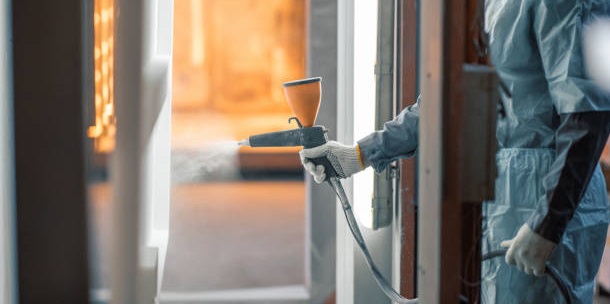
Powder coating uses dry powder applied from a gun. As the electrostatically charged powder is released from the gun, it sticks to the metal surface due to an opposite charge.
At Rusty Lions, we follow a meticulous three-step process for powder coating. First, we get rid of all impurities from the metal to ensure the durability of the coating. Next, we spray powder on industrial metals like aluminum, galvanized steel, and stainless steel using an electric charge. The part is then cured in a high-temperature oven above 200째C, which causes the powder to melt and spread uniformly over the surface.
Powder coating protects metals from corrosion, rust, chipping, scratching, fading, and other kinds of impact while maintaining its aesthetic value. This versatility means powder coating can be applied to almost all metal products. It's used in construction, healthcare, architecture, outdoor, and more.
The beauty of powder coating is that it can reach hard-to-access areas. Where liquid paint can only be applied horizontally or vertically, powder coating can cover hard-to-reach spaces, which is why it's perfect for industrial machinery
While liquid paint is cheaper than powder coating, it cannot achieve the same standard of finish that powder coating can. Powder coating is thicker than liquid paint and offers a longer-lasting finish with minimal need for maintenance. This weather resistance and minimal upkeep make powder coating a great choice for automotive and architectural elements that have to brave harsh outdoor environments.
Powder coating provides a better quality finish than liquid paint. Liquid paint often results in an insubordinate finish that is likely to drip, which isn't the case with powder coating. Dry powder provides a uniform finish over substrates likely to last 20 years or more.
Powder coating offers versatility in many colors and finishes. It is also possible to have a custom color or texture sourced by the manufacturer for your needs.
Wet paint releases harmful toxins in the air from Volatile Organic Compounds (VOCs). With powder coating, this risk is minimal. The latter also has a lower carbon footprint than wet paint.
Now that you know it's advantages, let's take a look at some of the disadvantages of powder coating:
Moreover, the use of ovens also means that powder coating won't work on surfaces that cannot withstand high temperatures, such as rubber.
With more than two decades of experience, Rusty Lions has put into place a controlled process that results in a perfect coating every time.
Rusty Lions is the leader in powder coating. We have a high-volume automated powder coating line that ensures high-quality application every time on a budget. With over two decades of experience and state-of-the-art equipment, we have the ability to handle any volume of work with OEM specifications.
Contact Rusty Lions to discuss your metal finishing needs today
Yes. Powder coating naturally forms a thicker layer, so achieving an ultra-thin film is difficult compared to liquid paint, which is better suited for minimal build applications.
No. Damaged sections usually require stripping and recoating of the entire part to maintain a consistent, seamless finish.
Yes. Equipment such as electrostatic spray systems, curing ovens, and blasting booths require significant investment, making it unsuitable for most DIY setups.
Yes. Each color change requires thorough cleaning of equipment to prevent contamination, making multi-color production slower and more costly than paint.
No. Only materials that can withstand curing temperatures of 350°F–400°F are suitable, excluding many plastics and low-heat composites.
Improper application or curing can create an uneven “orange peel” texture, making smooth, mirror-like finishes more difficult than with liquid paint.
Let us know if you have any questions by using the contact form below. We will get back to you as soon as possible. Please note our data privacy policy.
